Product impact
by enabling clinicians to transform complex healthcare data into interpretable cardiovascular insights through a structured analysis workflow
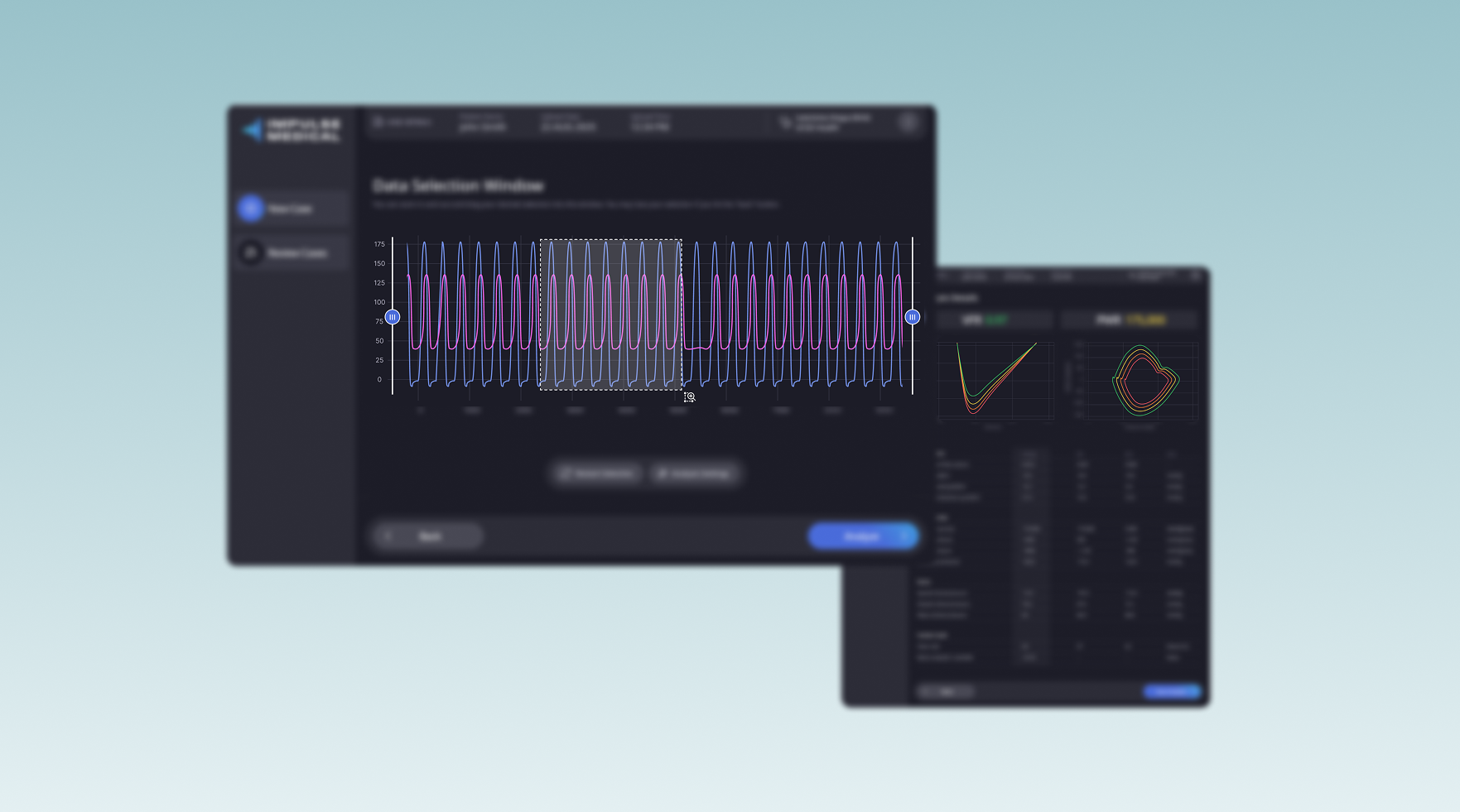
by providing transparency into the analysis process by allowing users to inspect signal quality, select data windows, and review supporting measurements before saving results
by consolidating patient intake, signal review, analysis, and reporting into a single end-to-end platform, reducing workflow fragmentation
Overview
Impulse Medical, a start-up medical software company in San Diego, wanted to build a software that supports cardiovascular assessment through the analysis of physiological data.
Due to the proprietary nature of the product, specific workflows, algorithms, and clinical outputs are omitted in this case study.
The challenge
.png)
Challenges:
• Large amounts of data and technical information
• Multiple decision points
• Need for accurach and confidence
• Complex clinical workflows
Designing for clarity and action
• Reducing cognitive load and visual noise
• Establishing clear information hierarchy
• Creating guided workflows
• Balancing simplicity with accuracy
The workflow
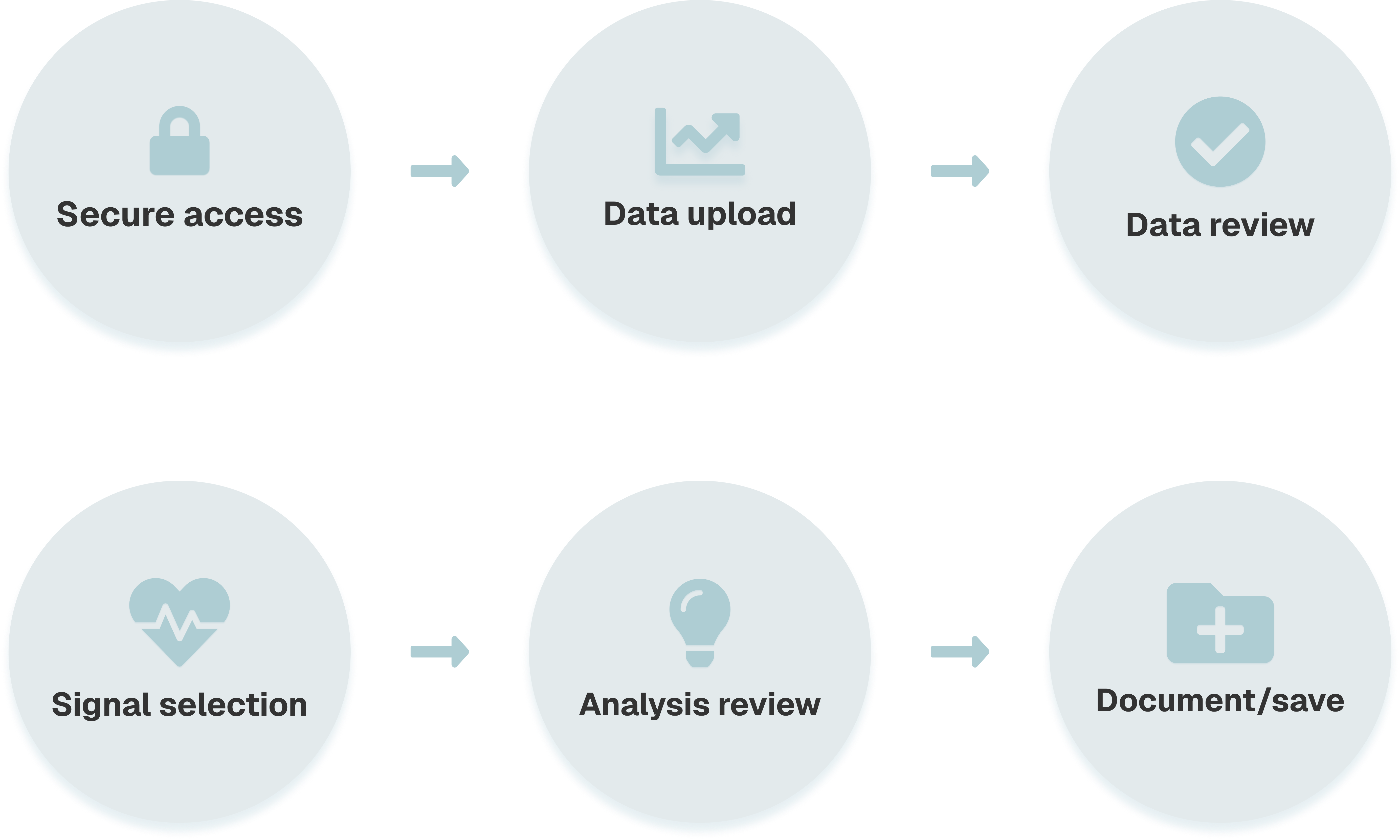
Mapping the end-to-end workflow helped identify opportunities to reduce cognitive load, improve guidance, and support confident decision-making.
Designing for decision-making

1. Structured intake workflows reduced friction while ensuring users had the information required to move forward
2. Introduced clear review and selection patterns to support confidence before analysis

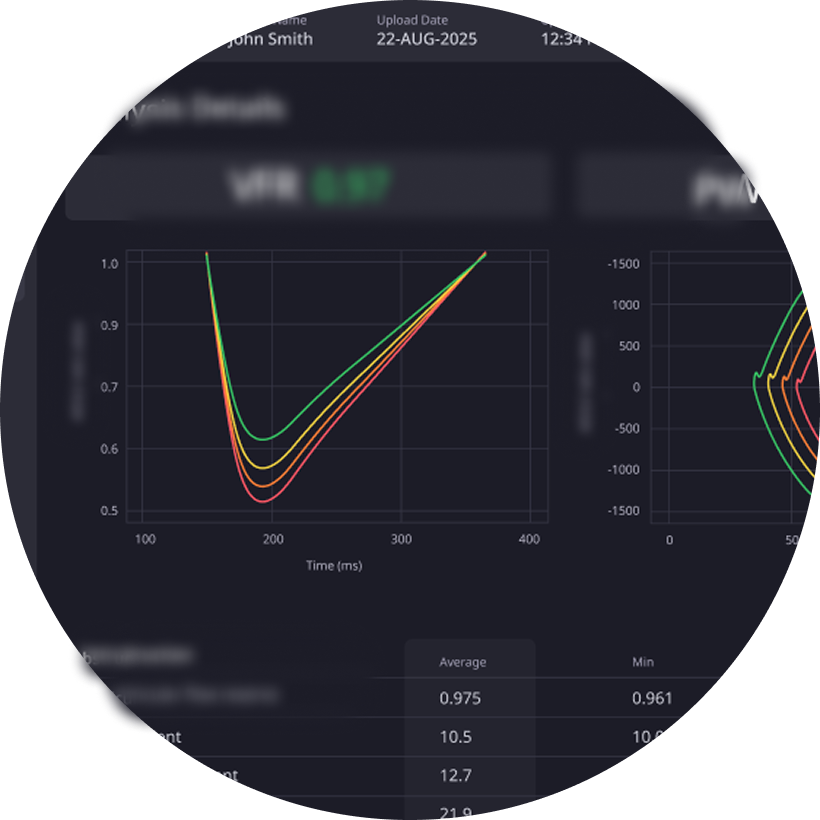
3. Key information was surfaced and complex information was organized into digestable sections. Even more detailed information that was nice to have but not necessary to move forward in the flow were placed in menus/settings and modals
Product impact
Key takeaways
.png)